
Gamification
Mar 2024 – Jun 2024
Communities were losing members because engagement wasn't reinforced. People were contributing, but there was no system to recognize it or encourage them to keep going. Creators had no built-in way to turn activity into momentum.
I understood the real problem: it wasn't about adding points. It was about making contribution feel visible and meaningful. I researched the space, mapped what competitors got wrong, and built Circle's gamification system from zero. Points, levels, leaderboards, and workflow-based rewards. Shipped in four months.
Product
Circle
Skills
End-to-end product design Solo user research Rapid iteration Design specs & component documentation
My role
Senior Product Designer
Timeline
Mar 2024 – Jun 2024
Team
2 Engineers, Head of design
Problem
Gamification was the #1 feature request on Circle and a recurring reason for churn. Competitors already offered it. We didn't.
For many communities, gamification is not a nice to have. It is a core engagement mechanism. Community owners saw members contributing every day by posting, commenting, and helping others, yet there was no built in way to recognize or reinforce that activity.
They were not asking for decoration. They were asking for simple systems like points and leaderboards to make contribution visible, motivate participation, and sustain engagement over time.
Reward
Make contribution visible and rewarding.
Automate
Automate recognition based on member behavior.
Inspire
Encourage recognition and healthy competition within community.
Process
Rewards only work when they feel personal. Engagement is different in every community. A fitness group values workout posts. A coding group values helping others. Recognition has to reflect that culture.
Most gamification systems are rigid. They rely on badges and streaks that treat every community the same. That creates short term spikes, not sustained engagement. The real need was flexibility.
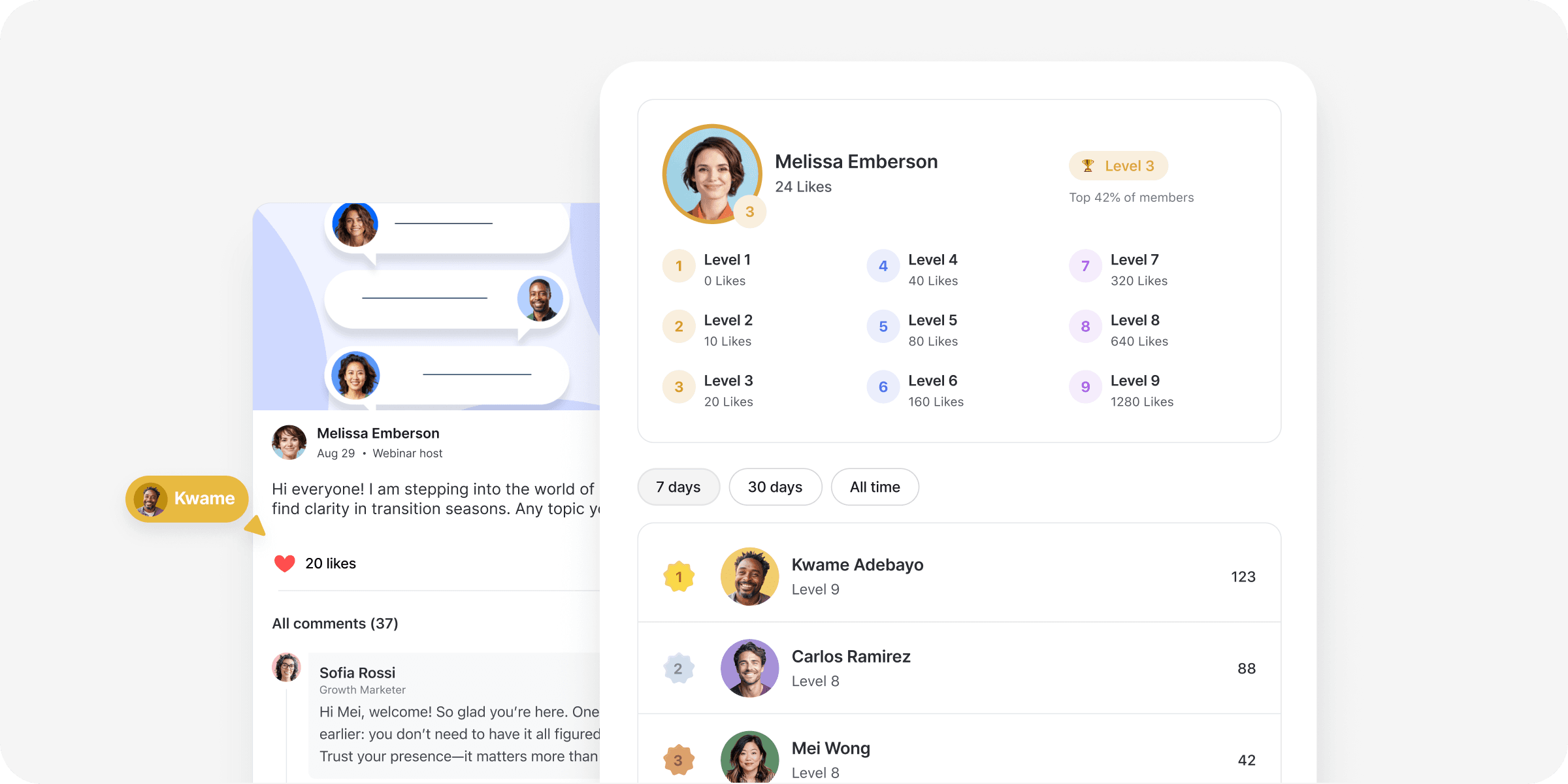
Instead of building fixed mechanics, I focused on creating adaptable feedback loops. Points reward everyday actions like posts, comments, and likes. Leaderboards create visibility and social proof. Levels introduce long term progression. Recognition becomes part of the experience, not decoration.
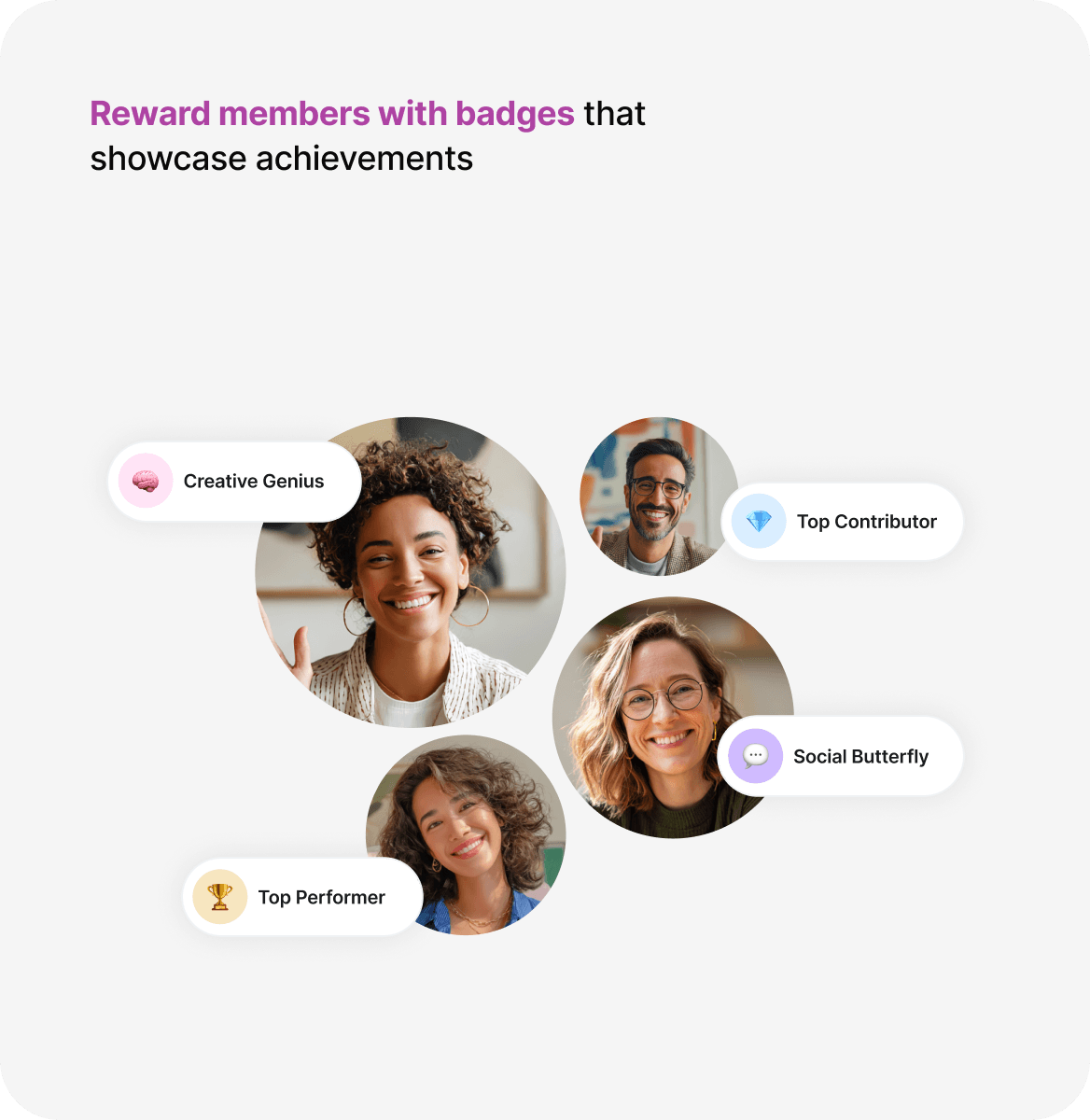
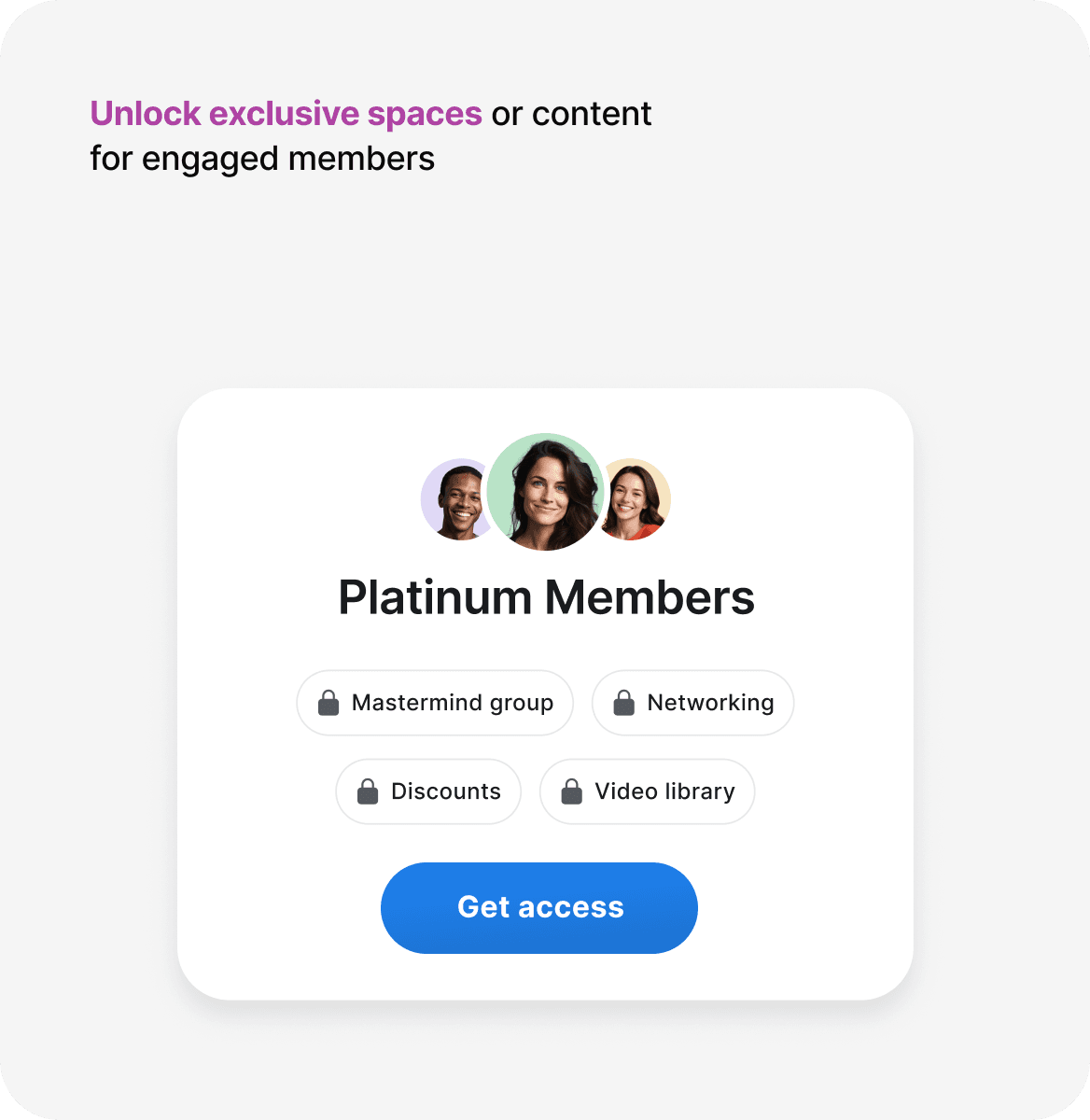
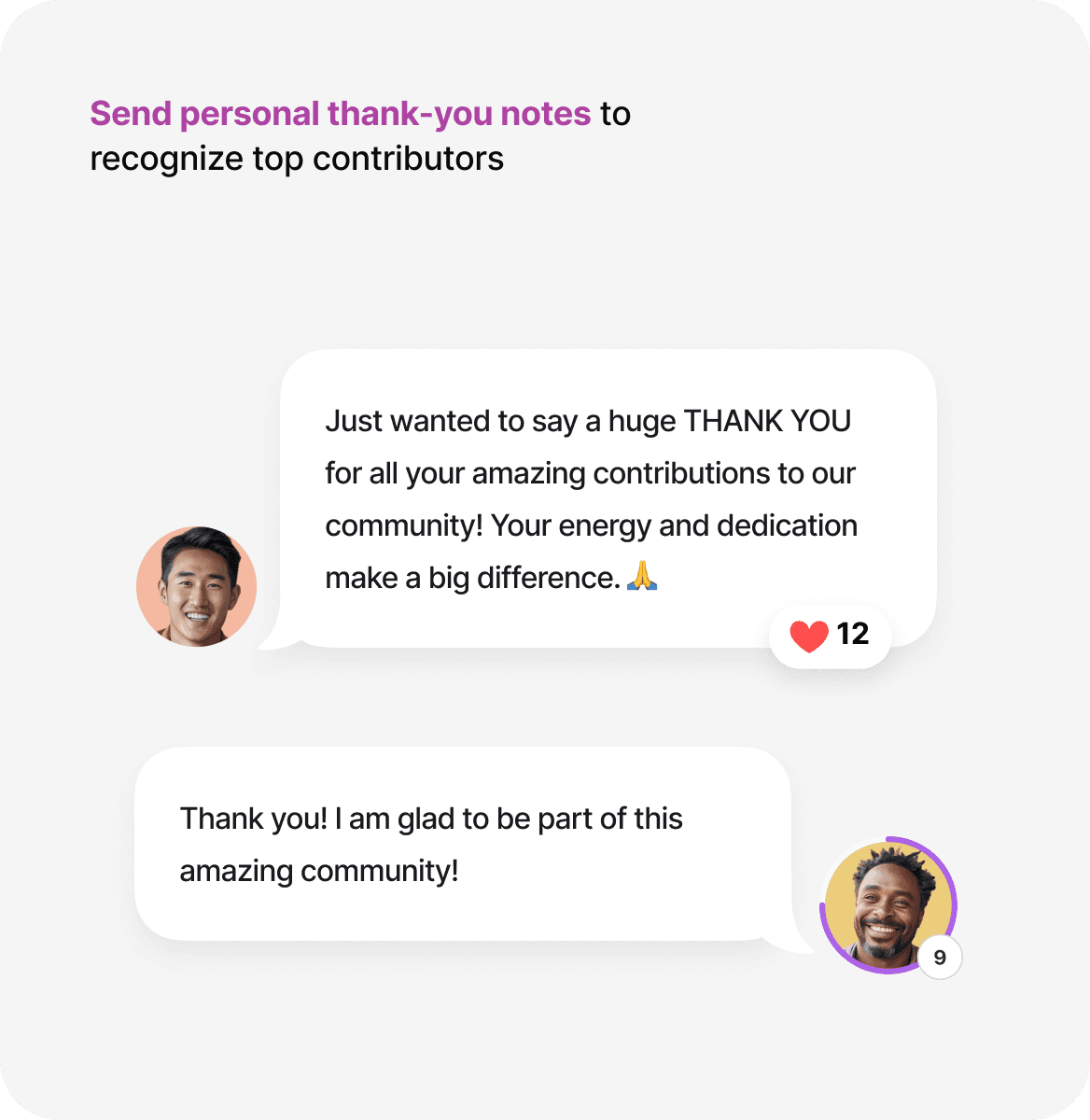
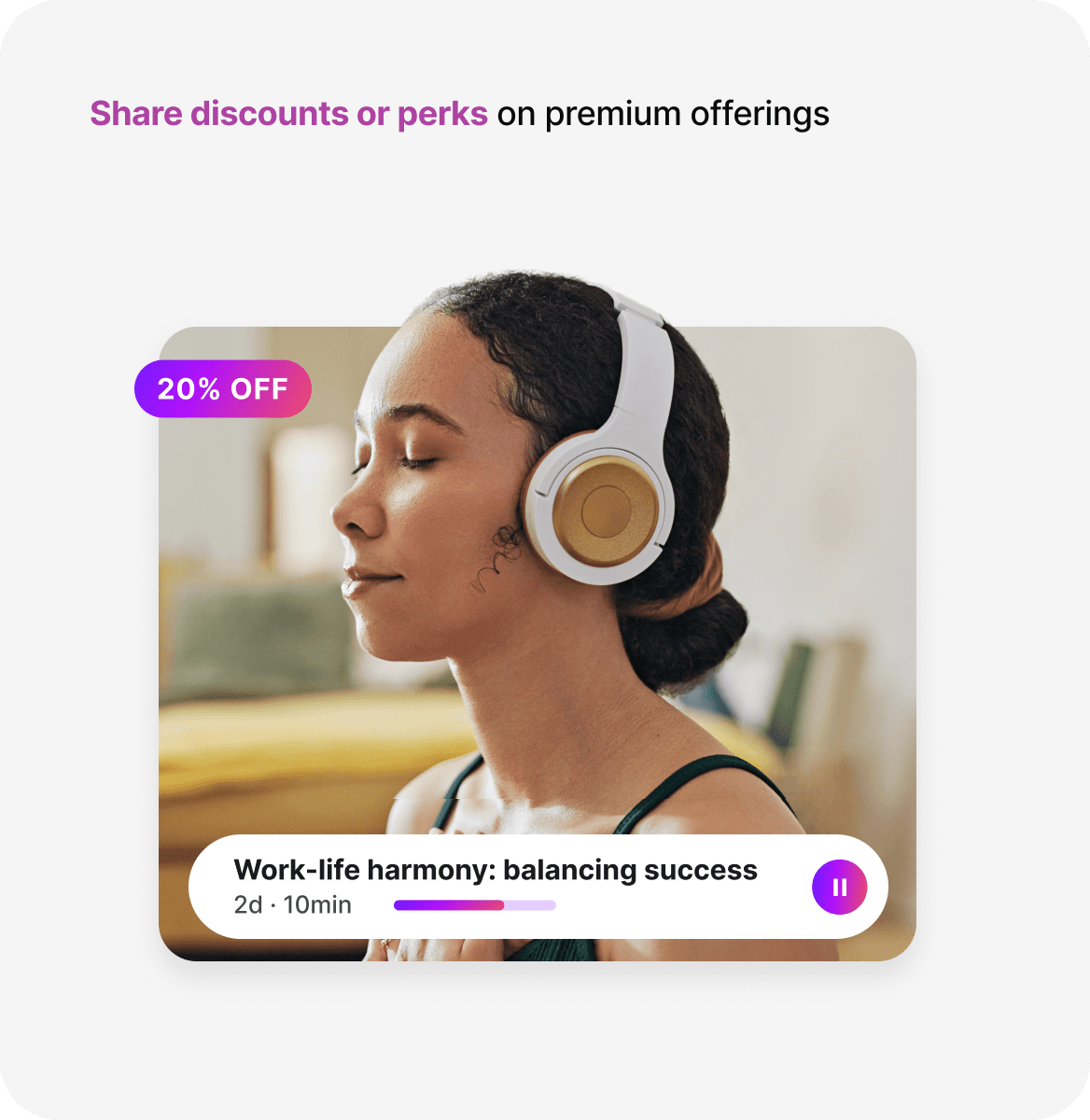
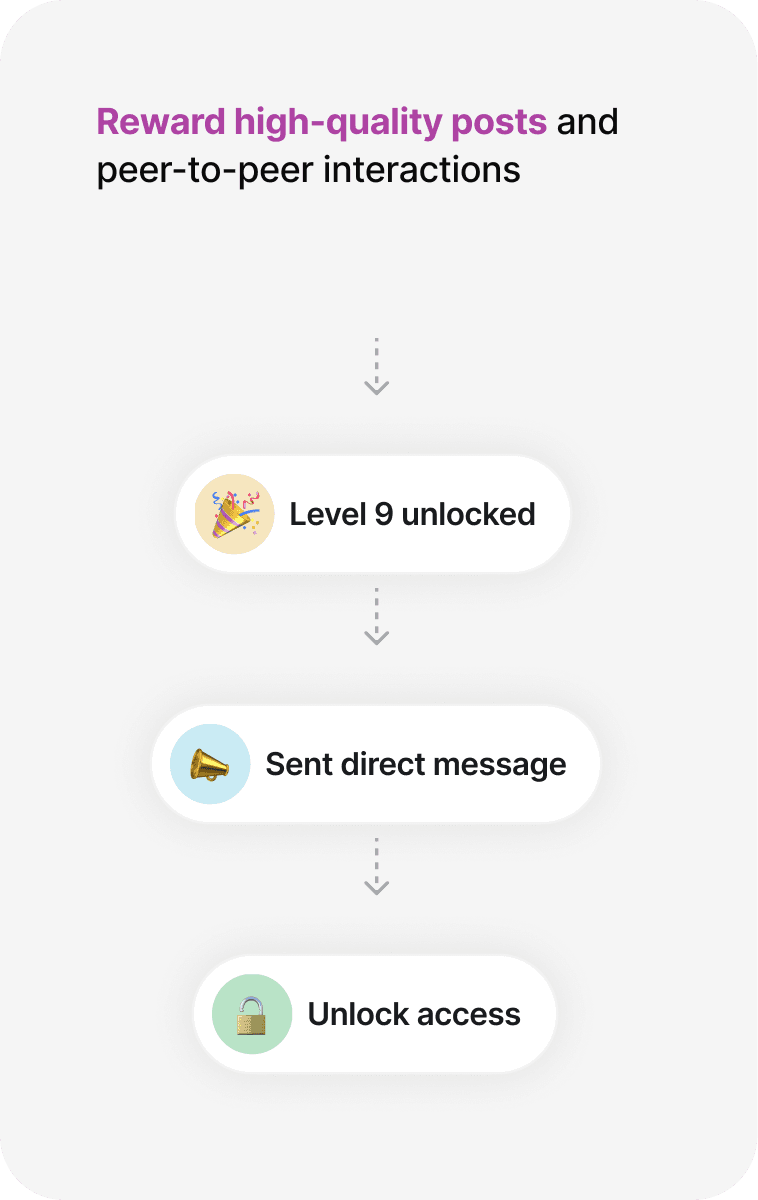
The key decision was embedding gamification into Circle's workflow engine. Community owners define what engagement means for them and automate rewards accordingly. Unlock spaces. Send thank you notes. Offer perks.
The result is not a badge system layered on top. It is a programmable recognition system that adapts to different communities and supports real engagement patterns.
Solution
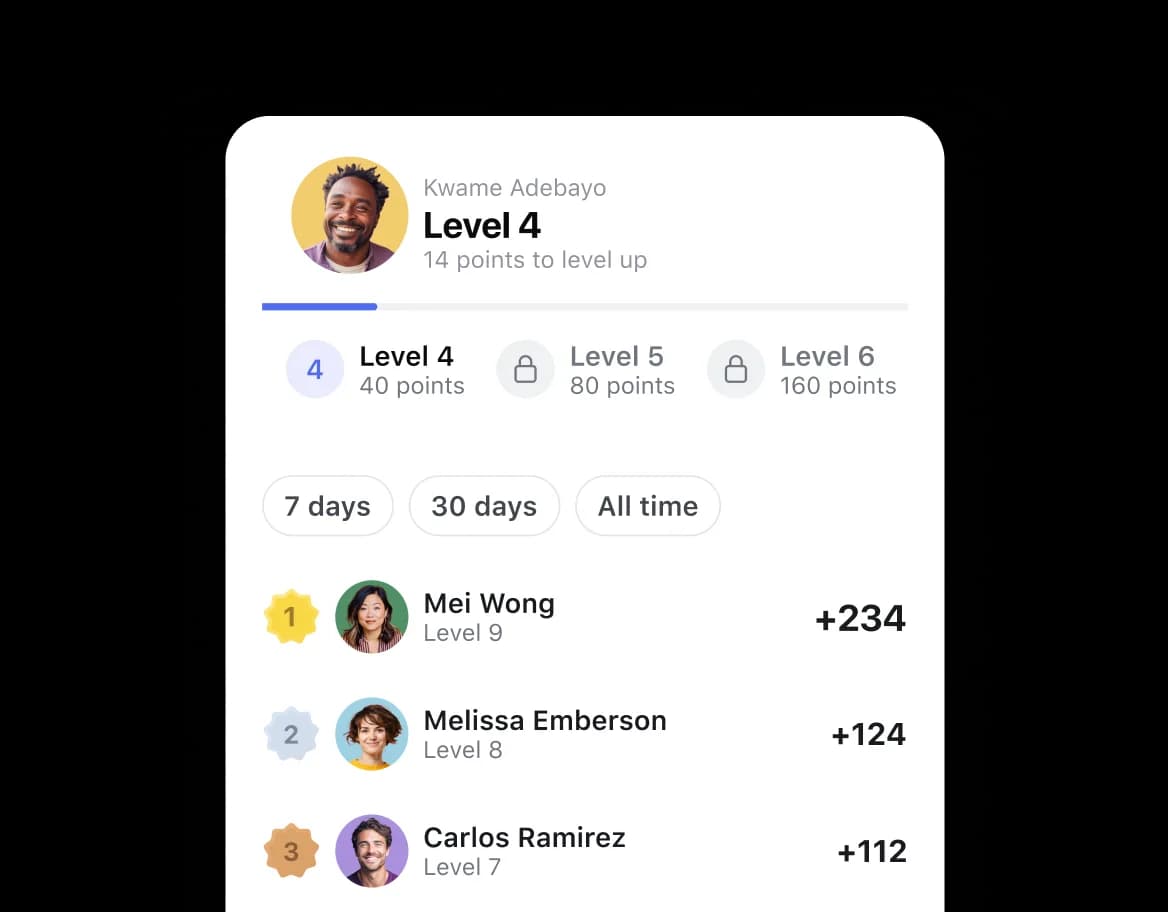
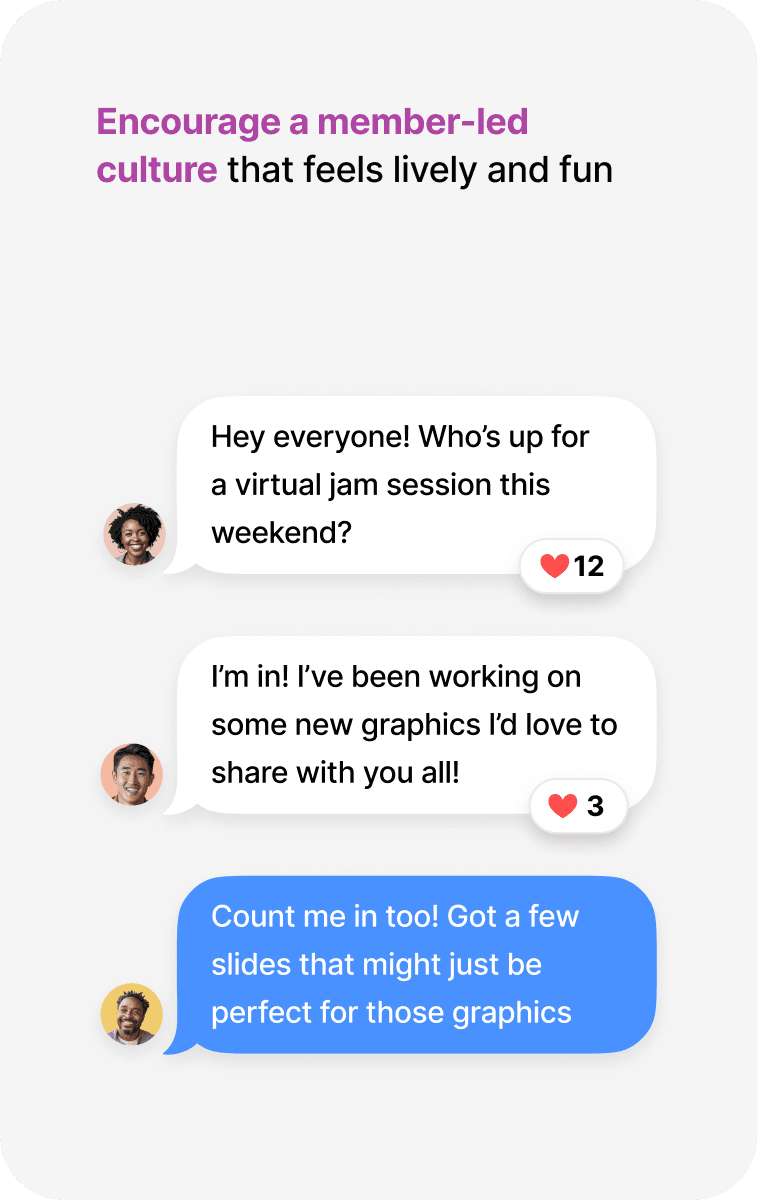
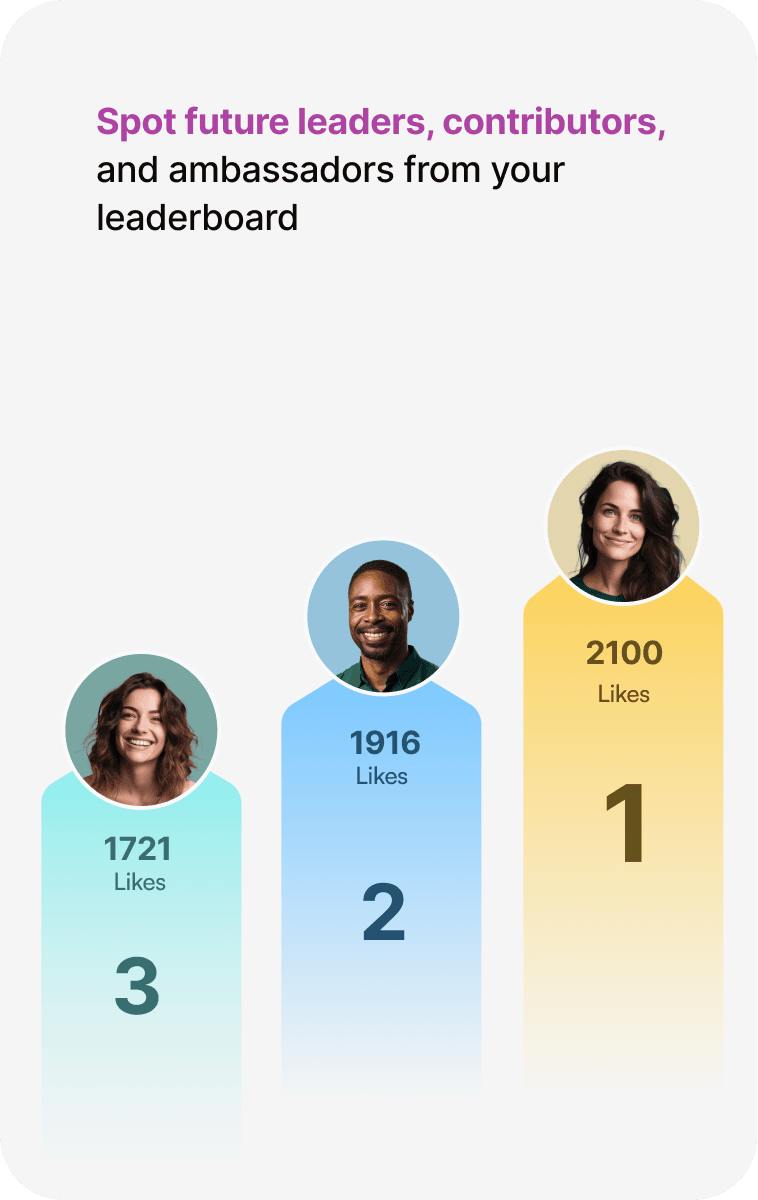
Points reward everyday actions like posts, comments, and likes. Every contribution earns something, making participation visible and reinforcing behavior in real time. Leaderboards scale from small groups of 50 to communities of 10,000. Levels give members a reason to keep progressing.
Under the hood, everything is powered by workflows. Gamification is not a separate feature layered on top, but part of Circle's core logic.
Community owners define what engagement means for them, set up automated rewards, and let the system run. A programmable system that adapts to different communities.
Progress unlocks new levels and custom rewards, automated via workflows
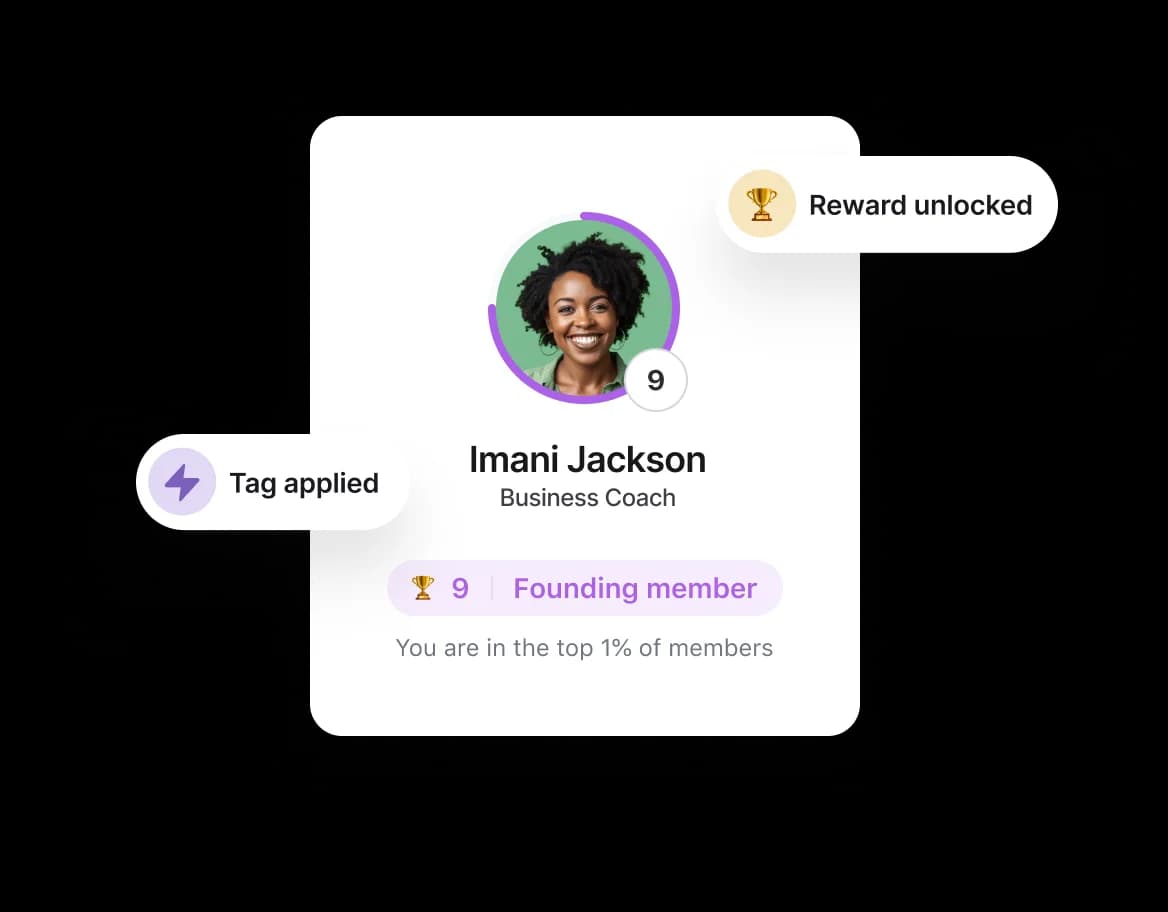
Members earn a point for likes and contributions
Impact
It worked because we focused on recognition, not just rewards. When people could see their contribution and progress, they stayed more engaged and communities felt more active.
+8%
Engagement
+3%
Retention
-11%
Churn rate